


Are You in the Weights? Inside the Viral AI Tool Showing What LLMs Know About You
A new tool called Are You in the Weights? lets you search any name and see how strongly GPT-5.5, Claude, Gemini, and other models recognize it.
Every large language model carries a hidden fingerprint of the internet it was trained on. Most of the time that's invisible — until someone builds a tool that turns it into a party trick. That's exactly what happened this week with Are You in the Weights?, a free site that lets anyone type a name and instantly see how strongly the leading AI models "recognize" it. It launched on Product Hunt and Hacker News on June 20–21, 2026, climbed to the #1 spot of the day on Product Hunt, and pulled in 70+ comments on a Show HN thread — fast becoming one of the most talked-about AI launches of the week.
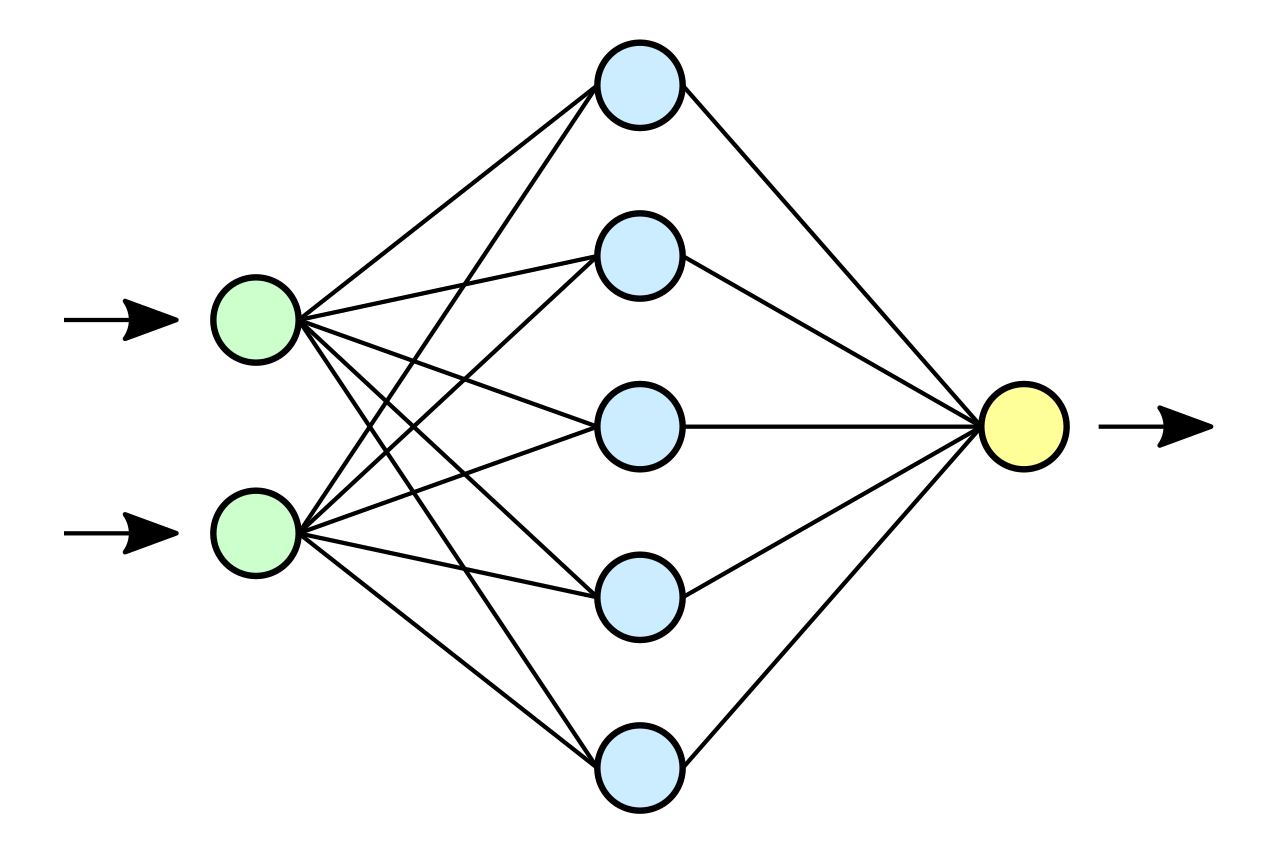
The premise is simple. "The weights" are the billions of numbers that make up a trained model's brain — the compressed residue of everything it read during training. Type in a name, and the tool queries a panel of frontier and small models — among them GPT-5.5, Claude Opus 4.8, Gemini 3.1, DeepSeek, Mistral, Kimi K2, and even tiny models like Llama 3.2 1B — and asks each one, in effect, "who is this?"
It then clusters the answers, assigns a "strength" score, and ranks you on a percentile against everyone else who's been searched. If enough models agree on who you are, you get a profile, a short AI-written bio, and even an 8-bit-style illustrated portrait generated from "the weights" of GPT-5.4 Image 2. If the models disagree or invent something, those answers get flagged in a "hallucinations" section instead.
The creator, Thomas Dimson (posting on Hacker News as turtlesoup), built the site with a design partner over the course of a few weeks, largely as "a fun hack and science experiment," in his own words. The clustering step — deciding which scattered model answers describe the same real person — runs on Kimi K2, chosen specifically to keep inference costs down across what is effectively dozens of parallel model calls per search.
The result is less a precision tool and more a transparency experiment. Dimson tuned the system to favor recall over precision, meaning it surfaces as many possible matches as it can rather than filtering aggressively — which is also why so many users found themselves mixed up with unrelated namesakes, retired footballers, or entirely fictional people.
Part of the appeal is the sheer unpredictability of the results. Hacker News commenters reported being misidentified as Australian rugby players, jazz-funk musicians, Mexican actors, and in one unlucky case, a true-crime perpetrator who turned out to share a last name with a different person entirely. Others discovered that only one or two models — often Kimi or DeepSeek — had any information about them at all, while flagship models like GPT-5.5 or Claude drew a blank.
That inconsistency is the actual insight. It's a hands-on demonstration of something AI agencies and marketers have been saying for a while: visibility inside a model's training data is uneven, model-specific, and largely opaque from the outside. A person, brand, or product might be confidently described by one model and invisible to another, with no clear way to predict which. For businesses now worried about how they show up in AI answer engines and chat assistants — the same conversation driving interest in "AI visibility" or AEO (answer engine optimization) — this tool is a strangely intuitive way to see that problem in action.
Within the first hour on Hacker News, commenters flagged a real issue: the site had a public "latest searches" leaderboard that listed every name anyone had typed in, with seemingly endless pagination. Since the tool encourages people to search their own name, that meant a live, public feed of real names tied to AI-generated (and sometimes wrong, sometimes unflattering) profiles.
To his credit, the maker responded in real time during the thread — disabling the "latest" feed and capping pagination within roughly 20 minutes of the complaint surfacing. It's a useful reminder for anyone shipping a fast indie AI project: when user input is the product, assume it will be scrutinized for privacy implications on day one, and be ready to patch immediately.

Our cutting-edge features simplify collaboration and creativity, making your workflow intuitive and efficient. Transform your vision into reality effortlessly with Hadidiz Flow.