
Precision Audio–Haptics Synchronization for a Cross-Platform Therapeutic Music App
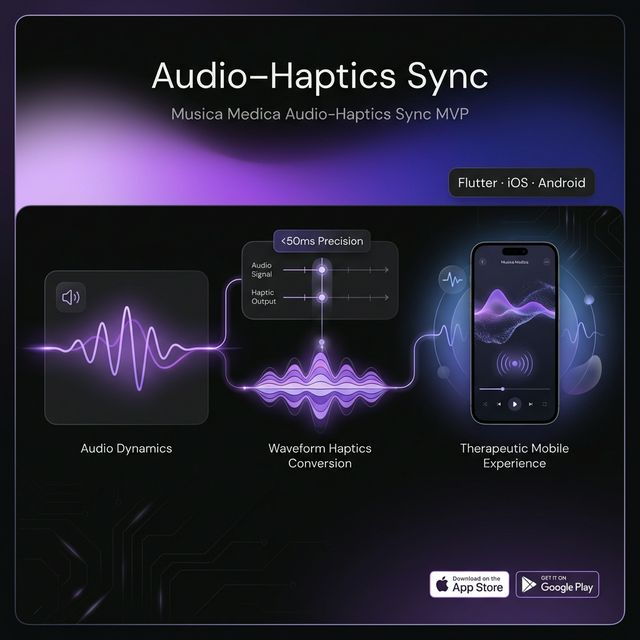
Finalized and stabilized a Flutter-based iOS/Android app that converts music dynamics into waveform haptics and keeps both channels tightly synchronized with user-calibrated latency.


Problem Statement
The product was a precision timing system—not a typical UI app—requiring stable, low-latency synchronization between metronome/music audio and waveform-based vibration patterns across very different device motors (Android vs iPhone Taptic Engine). In parallel, launch was blocked by store compliance decisions around subscriptions (Paddle vs Apple/Google IAP) and complex multi-country tax forms that risked rejection or account penalties.
Our Approach
Integrated the existing Flutter architecture with native Android (SoundPool + VibrationEffect waveform) and iOS scaffolding (Core Haptics + AV audio pipeline), exposed parity APIs through platform channels, and delivered a Sync Test experience with persisted calibration offsets (including positive/negative latency) plus a device capability/test-matrix workflow. Guided the release process to ensure store-compliant monetization and completed the required Play Console tax configuration as an individual.
Waveform-to-Haptics Pattern Generation Pipeline (offline automation)
Challenges We Solved
Store compliance risk: external payments vs In‑App Purchases
Client preferred Paddle to avoid annual, per-country tax administration, but Apple/Google typically reject external payment flows for digital goods (risk of app rejection or account suspension).
Advised a compliant IAP-first approach and explained the Merchant of Record benefit (Apple/Google handle tax calculation/collection/remittance in most regions). Enrolled/leveraged Apple Small Business Program guidance and completed the Play Console tax setup steps required for release.
Low-latency timing calibration with positive & negative offsets
Perceived mismatch between what users hear and feel varies by device motor, OS scheduling, and audio pipeline; the system must support calibration in both directions (audio leading or haptics leading) and persist settings reliably for repeat sessions.
Stabilized the Sync Test workflow to allow manual calibration and ensured persisted latency settings apply consistently during playback. Confirmed user feedback loops via TestFlight to iterate on perceived timing and haptic feel without destabilizing the scheduling engine.
Project Timeline
Discovery
Aligned on MVP scope: finalize Flutter integration, stabilize Android sync, implement/tune iOS Core Haptics + audio, add calibration offsets, ensure persistence, and prepare a device test matrix + CSV export. Clarified track/program mapping and user flows (programs, track library, placements, durations).
Build
Integrated native engines behind platform channels, shipped an iOS TestFlight beta for rapid real-device feedback, and iterated on haptic perception issues by adjusting pattern instructions and calibration behavior. Resolved monetization/compliance direction by shifting to official store payment rules and completing required console paperwork.
Launch
Published production builds to both Google Play and Apple App Store after final release checks, including Play Console tax form completion and App Store readiness. Delivered stable cross-platform playback with synchronized audio–haptics and persisted calibration controls.
Ready to Build Something Similar?
Let's discuss how we can help transform your business with AI.
Start Your Project